


Extended Reality (XR) and Spatial Computing are no longer futuristic concepts confined to science fiction or experimental labs. As we move toward 2026 and beyond, these technologies are rapidly reshaping how humans interact with digital environments, blending the physical and virtual worlds into a single, immersive experience. From enterprise workflows and healthcare training to retail, education, and product design, XR and Spatial Computing are becoming foundational technologies for next-generation digital interaction.
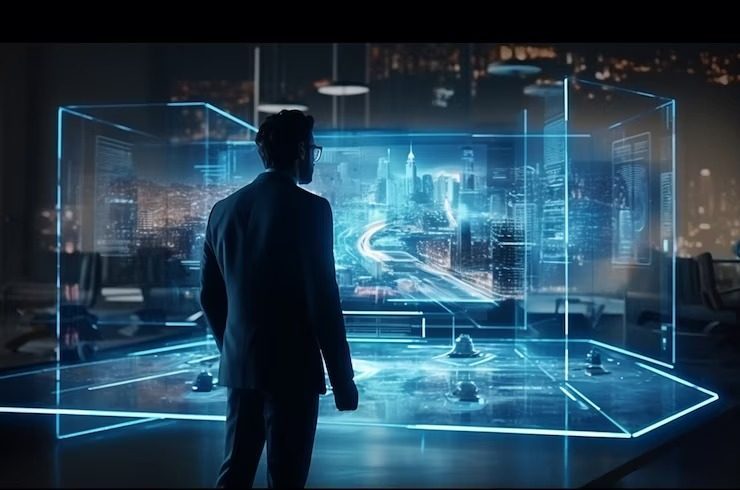
Extended Reality is an umbrella term that includes Augmented Reality (AR), Virtual Reality (VR), and Mixed Reality (MR). Spatial Computing goes a step further by enabling digital content to exist and interact within real-world physical spaces. Instead of interacting with flat screens, keyboards, or touch interfaces, users engage with data, objects, and environments in three dimensions, using gestures, voice, eye tracking, and spatial awareness.
This shift marks a fundamental change in how digital systems are designed and consumed.
The Evolution from Screens to Spatial Experiences
For decades, human-computer interaction has revolved around screens. Desktop monitors, laptops, tablets, and smartphones defined the way people worked, learned, and communicated. While these interfaces became increasingly powerful, they remained limited by two-dimensional interaction.
Extended Reality breaks this limitation by allowing digital elements to coexist with the real world. Spatial Computing understands depth, position, movement, and physical surroundings, enabling applications to respond intelligently to where users are and how they move. This creates experiences that feel natural, intuitive, and deeply immersive.
Instead of navigating menus, users can manipulate virtual objects as if they were physical. Instead of reading instructions, they can see guidance layered directly onto their environment. This shift dramatically reduces cognitive load, improves understanding, and accelerates decision-making.
Real-World Use Cases Driving Adoption
One of the biggest drivers behind XR and Spatial Computing adoption is enterprise demand. Businesses are increasingly using immersive technologies to improve efficiency, reduce errors, and enhance collaboration.
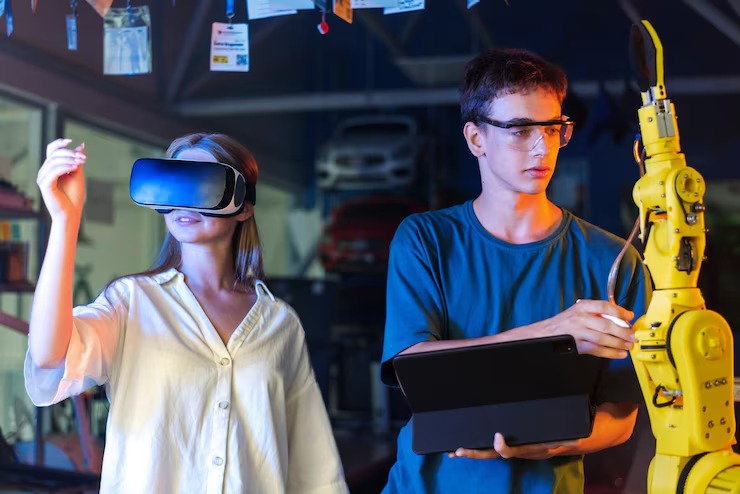
In manufacturing and industrial environments, spatial interfaces are used for real-time equipment diagnostics, guided assembly, and remote expert assistance. Technicians can see step-by-step instructions overlaid on machinery, minimizing downtime and human error.
In healthcare, XR is transforming medical training, surgical planning, and patient education. Medical professionals can practice complex procedures in realistic virtual environments, while spatial visualization helps doctors better understand anatomy and treatment outcomes.
Retail and e-commerce are also experiencing a major shift. Spatial Computing allows customers to visualize products in their own environment before purchasing. Furniture placement, interior design previews, and virtual try-ons create confidence and reduce return rates, while delivering a highly engaging customer experience.
Education and training are becoming more experiential. Instead of passive learning, students can explore historical events, scientific simulations, or complex systems in immersive environments that improve retention and comprehension.
The Role of AI in Spatial Computing
Artificial Intelligence is playing a critical role in accelerating the capabilities of Extended Reality. AI enables real-time object recognition, gesture tracking, voice interaction, and environmental understanding. This allows XR systems to adapt dynamically to user behavior and surroundings.
With AI integration, spatial experiences become more personalized and context-aware. Applications can respond intelligently to user intent, adjust difficulty levels in training simulations, or provide predictive insights based on real-time interaction data.
As AI models become more efficient and capable of running on edge devices, Spatial Computing experiences will become faster, more private, and less dependent on cloud connectivity, making them suitable for real-world, mission-critical use cases.
Hardware Advancements Fueling Growth
The growth of XR and Spatial Computing is also driven by rapid advancements in hardware. Headsets are becoming lighter, more comfortable, and more powerful. Improvements in display resolution, field of view, battery life, and sensor accuracy are removing many of the barriers that previously limited adoption.
At the same time, spatial computing is expanding beyond headsets. Smart glasses, mobile devices, and wearable sensors are increasingly capable of delivering AR experiences without fully immersive hardware. This flexibility allows businesses to choose solutions that fit their operational needs and user comfort levels.
As hardware costs decrease and ecosystems mature, XR technologies are becoming more accessible to startups, enterprises, and consumers alike.
Challenges and Considerations
Despite its promise, Extended Reality still faces challenges. User comfort, motion sickness, device adoption, and content development complexity remain important considerations. Designing effective spatial experiences requires a strong understanding of 3D interaction, UX principles, and real-world context.
Security and privacy are also critical, especially as spatial systems collect environmental and behavioral data. Responsible design, transparent data usage, and compliance with regulations are essential for building trust in immersive technologies.
Organizations adopting XR must focus on solving real problems rather than adopting the technology for novelty alone. The most successful implementations are those that clearly improve workflows, reduce costs, or enhance user experience in measurable ways.
The Future of Digital Interaction
Extended Reality and Spatial Computing represent a paradigm shift in how digital systems are designed and experienced. As these technologies mature, they will move from experimental tools to everyday platforms that redefine work, communication, and creativity.
In the coming years, spatial interfaces will coexist with traditional screens, offering users the freedom to choose the most effective way to interact with information. Businesses that invest early in immersive technologies will gain a competitive advantage through better engagement, improved efficiency, and innovative user experiences.
The future is not just digital—it is spatial.
Let’s Build the Future Together
If you’re exploring Extended Reality, Spatial Computing, or next-generation software solutions, collaboration with the right technology partner makes all the difference.
Visit techrah.com to collaborate with our experts in software development, UI/UX design, and emerging technologies. Let’s transform ideas into immersive digital experiences that drive real-world impact.